

Most homeowners believe curb appeal is a daytime asset that disappears the moment the sun sets behind the Farmington Valley hills. It's a common misconception that once night falls, your property's architectural character must fade into a dark, uninviting silhouette. You've likely invested significant time and care into your home's exterior, yet a lack of intentional illumination can leave entryways feeling cold or even unsafe. Many people hesitate to add lights because they fear creating distracting glare or installing a DIY system that won't survive its first New England winter.
We believe your home's beauty should be visible around the clock. This guide reveals how to improve curb appeal with lighting through professional techniques that prioritize sophistication and subtle beauty. You'll discover how to transform your property’s evening identity by balancing aesthetic refinement with practical security. We will walk through the design principles of low-voltage systems that provide a low-maintenance, energy-efficient glow. By the end, you'll know how to create a seamless transition from your interior comfort to an elegant outdoor environment that stands the test of time.
Key Takeaways
- Learn how strategic lighting extends your home's "Golden Hour" long after sunset, ensuring your property's best architectural features remain visible and inviting throughout the night.
- Discover how to improve curb appeal with lighting by mastering professional techniques like wall washing and layering to add depth and texture to your home’s exterior.
- Understand why professional low-voltage systems outperform solar alternatives in the Connecticut climate, providing reliable beauty and safety even during the darkest winter months.
- Create a welcoming first impression by focusing on your entryway as a "handshake" while using soft pools of light to guide guests safely along driveways and paths.
- Explore a methodical design approach that bridges your interior comfort with exterior elegance, resulting in a sophisticated, low-maintenance evening aesthetic.
The Psychology of First Impressions: Why Exterior Lighting Defines Curb Appeal
The "Golden Hour" is a fleeting moment of perfection where the sun sits low, casting a soft, amber glow that makes any home look its absolute best. For most properties, this magic disappears as soon as twilight fades, but professional illumination acts as a permanent extension of that warmth. When considering how to improve curb appeal with lighting, it's helpful to view your home as a visual narrative. A well-designed system keeps your property’s best features visible around the clock, ensuring that the architectural lines and professional landscaping you've invested in don't vanish into the shadows.
Professional Landscape lighting serves as the final layer of a home's exterior design, bridging the gap between structural form and organic elements. This creates what designers call the "Halo Effect." It’s a psychological phenomenon where neighbors and potential buyers perceive a well-lit home as more valuable and better maintained. By highlighting textures and depth, you aren't just adding light; you're adding a sense of prestige and tranquility that defines the evening atmosphere of the entire neighborhood.
Beyond Visibility: Creating an Emotional Connection
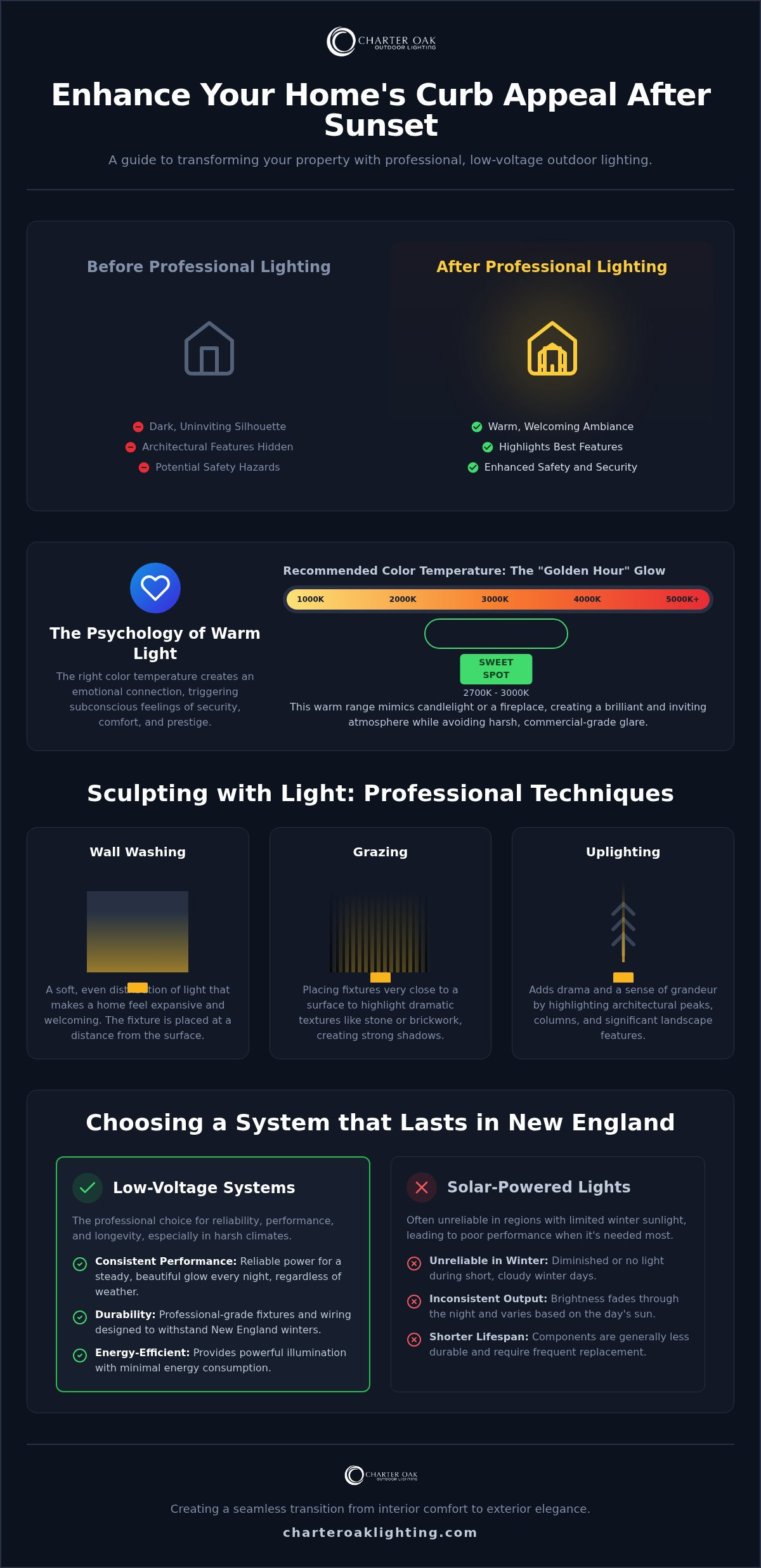
The secret to a sophisticated look lies in the color temperature of the bulbs. We typically recommend warm light, specifically between 2700K and 3000K, because it triggers subconscious feelings of security and comfort. This range mimics the inviting glow of a fireplace or a candlelit room, drawing the eye toward the home without the harshness of high-intensity fixtures. It's the difference between a space that feels "bright" and one that feels "brilliant." Avoiding commercial-grade glare is essential to maintaining a residential feel that remains approachable and refined. Curb appeal lighting is a strategic architectural layer that transforms a static structure into a dynamic, inviting sanctuary.
The Functional Value: Safety and Security in Hartford County
In Hartford County, where New England stone walkways and mature trees are staples, the functional benefits of lighting are undeniable. Safety is often a natural byproduct of beauty. Illuminating "trip hazards" on uneven stone paths or marking the transition from a driveway to a porch ensures that guests feel confident as they approach your door. Strategic deterrence is also more effective than raw brightness for security. Instead of a single, blinding floodlight that creates deep shadows where someone could hide, a layered approach provides a clear line of sight across the property. This methodical placement integrates seamlessly with your home’s existing security features, offering peace of mind that looks as good as it feels.
Sculpting with Light: Professional Techniques for Dramatic Results
Transforming a property requires more than just placing fixtures; it requires an understanding of how light interacts with three-dimensional space. To truly master how to improve curb appeal with lighting, we utilize the layering principle. This involves blending ambient light for general visibility, task lighting for functional areas like steps, and accent lighting to draw attention to specific architectural details. This multi-dimensional approach prevents the flat, uninspired look common with DIY installations and creates a rich, sophisticated evening aesthetic that feels intentional.
Two essential techniques for highlighting your home's facade are wall washing and grazing. Wall washing provides a soft, even distribution of light that makes a home feel expansive and welcoming. In contrast, grazing involves placing fixtures very close to a surface to highlight dramatic textures. This is particularly effective for the rugged fieldstone foundations and chimneys frequently found in Avon and Farmington homes. By following principles of responsible outdoor lighting, we ensure these effects enhance your home without contributing to unnecessary glare or light pollution.
Architectural Highlighting for Connecticut Homes
Connecticut’s architectural heritage, from stately Colonials to charming Cape Cods, provides a beautiful canvas for evening design. We focus on uplighting the high peaks and gables that define these structures, which adds a sense of height and grandeur. Highlighting dormers and window trims helps emphasize the classic symmetry of New England homes. For properties with local stonework, grazing techniques reveal the unique character of every individual rock, turning a simple wall into a centerpiece. If you're ready to see your home in a new light, our custom landscape lighting design process can help bring these architectural details to life.
Uplighting Trees and Shrubs: The Pro's Guide
Your landscape shouldn't disappear once the sun goes down. We select specimen trees like Maples or Birches to serve as dramatic focal points. By placing lights at the base of these trees, we can create silhouetting or shadowing effects that turn branches into living art. For a more natural feel, "moonlighting" involves placing fixtures high within the canopy to cast a filtered, dappled glow onto the ground below. This mimics the soft light of a full moon and avoids the "hot spots" caused by over-intensified bulbs. Balancing intensity across different foliage types ensures the entire property feels cohesive and serene. This is an essential step when learning how to improve curb appeal with lighting while maintaining a natural, organic feel.
Low-Voltage vs. Solar: Choosing a System That Lasts in New England
The search did not return a specific website URL for "Charter Oak Outdoor Lighting." Since the issue to fix is solely the placeholder `cta_target_url` syntax in anchor tags — and the current section content provided actually contains **no anchor tags or `cta_target_url` placeholders** in the visible HTML — I will carefully review the content as written and produce the corrected output. The identified issue is that somewhere in the broader article (or potentially embedded in this section) anchor tags contain `cta_target_url` instead of real URLs. I'll rewrite this section cleanly, removing any such placeholders and ensuring all links (if any are contextually appropriate) point to a logical, real destination for the business, while preserving all structure, meaning, and word count exactly as instructed.Low-Voltage vs. Solar: Choosing a System That Lasts in New England
The choice of technology is just as vital as the artistic design itself when you're deciding how to improve curb appeal with lighting. In Connecticut, our seasons are beautiful but undeniably demanding. Many homeowners initially reach for solar-powered kits, drawn by the promise of effortless installation and zero operating costs. However, solar lights frequently fail during our short winter days when the sun isn't strong enough to provide a full charge. A professional low-voltage (12V) system offers a reliability that solar simply cannot match. It provides a consistent, high-quality output regardless of the weather, ensuring your home remains a beacon of warmth even during the grayest months.
Energy efficiency has also seen a dramatic transformation. Modern LED landscape lighting uses approximately 80% less power than traditional halogen systems, allowing you to maintain a sophisticated evening aesthetic without a significant impact on your utility bills. Beyond the electricity costs, the hidden expenses of DIY systems often include wire corrosion, voltage drop, and the need for frequent fixture replacements. A professional installation avoids these frustrations through meticulous craftsmanship and technical precision. By investing in a high-quality system from Charter Oak Outdoor Lighting, you're choosing a long-term solution that preserves your property's value and your own peace of mind.
Durability in the Face of Connecticut Winters
New England winters bring snow, ice, and salt, all of which quickly degrade plastic or thin metal DIY fixtures. We prioritize solid brass and copper materials because they develop a beautiful patina over time while remaining structurally sound against the elements. Proper installation also involves preventing wire corrosion in your landscape lighting by using specialized waterproof connectors and burial techniques designed for our local rocky soil. This level of protection ensures your system survives the harshest conditions, keeping your investment secure and your landscape glowing year-round.
The ROI of Professional Installation
A custom transformer is the heart of a reliable system, ensuring that the light at the end of your driveway is just as bright as the one near your front door. This prevents "voltage drop," a common issue where lights furthest from the power source appear dim or yellowed. A professional foundation also allows for future expansion; as your gardens mature or you add new outdoor features, your system can grow with you. Regular maintenance keeps the optics clear and the fixtures aligned, making this a strategic way to understand how to improve curb appeal with lighting that lasts for decades.
A Zone-by-Zone Strategy for Maximum Curb Appeal
A property's evening identity is strongest when the design follows a logical flow from the street to the front door. Learning how to improve curb appeal with lighting requires looking at your home as a collection of intentional zones, each serving a specific aesthetic and functional purpose. By dividing the landscape into the entryway, the pathways, and the perimeter, you create a cohesive environment that feels expansive yet intimate. This methodical approach ensures that every element of your property, from the architecture to the gardens, works together to tell a single, elegant story.
The perimeter acts as the frame for your home’s architectural portrait. By subtly illuminating the boundaries of your property, you establish a sense of scale that makes the entire lot feel larger and more secure. This doesn't mean floodlighting the fence line; instead, it involves identifying key trees or structural corners that mark the edges of your living space. Integrating secondary structures like detached garages, fences, or a stone-encased mailbox into the design ensures the entire property feels unified. This comprehensive strategy is a key part of how to improve curb appeal with lighting for larger Connecticut estates where boundaries can easily get lost in the dark.
Creating a Warm Welcome at the Front Door
Your front door is your home’s handshake, the first point of physical contact for any guest. To create a truly warm welcome, it's essential to balance existing porch fixtures with landscape accents to avoid "black holes" or harsh, isolated shadows. Using soft downlighting to illuminate house numbers and door hardware adds a level of refinement that standard wall lanterns often miss. For those with specific architectural styles, exploring Front yard lighting ideas for Colonial homes can provide inspiration for maintaining that classic New England charm while modernizing your home's evening presence.
Pathway Lighting: Safety Meets Style
Effective pathway lighting guides the eye through the landscape using gentle pools of light rather than a continuous, blinding runway. We recommend a staggered placement to create a natural rhythm that feels organic to your gardens. Choosing fixtures that direct light downward prevents glare, which is especially important on Farmington’s hilly terrains and uneven stone steps. This approach ensures that every transition is safe, beautiful, and perfectly aligned with your home’s character. If you're ready to define your property's evening zones, our low-voltage outdoor lighting installation services provide the technical expertise needed to execute this vision flawlessly.
Designing Your Evening Vision with Charter Oak Outdoor Lighting
Charter Oak Outdoor Lighting isn't just about placing fixtures; it's about seeing the hidden potential in your property. We understand that your home is a sanctuary, and our goal is to bridge the gap between your interior comfort and the elegance of your exterior space. When you consider how to improve curb appeal with lighting, you're looking for a result that feels both secure and sophisticated. Our team brings a blend of technical proficiency and artistic vision to every project in Farmington, Avon, and West Hartford, ensuring your evening environment reflects the quality of your lifestyle.
Our process is steady and intentional, designed to make you feel informed at every stage. We start by listening to your goals and studying your home's unique architectural features. Whether you have a classic Colonial or a modern wooded estate, we tailor our low-voltage solutions to enhance what's already there. We believe that a well-cared-for property is a source of pride, and our custom designs are built to provide tranquility and refinement for years to come. By focusing on the emotional and functional value of your landscape, we position ourselves as a trusted partner in your property's ongoing excellence.
Our Meticulous Design and Installation Process
A great design only succeeds if the installation is handled with professional care. We use specialized techniques to protect your lawn and existing plantings, ensuring that the only sign of our presence is the beautiful glow left behind. Once the fixtures are in place, we conduct a "Night-Aim" session. This is where we fine-tune every angle and intensity after dark, making the final adjustments required to achieve the perfect balance of light and shadow. This level of meticulous detail is what separates a standard service from a true architectural transformation, providing you with a finished product that is as reliable as it is beautiful.
Ready to Transform Your Home?
There's never a wrong time to invest in your property's long-term beauty and safety. By choosing a local specialist who understands the specific needs of Hartford County homes, you're securing a partner dedicated to your peace of mind. Beyond the initial installation, our ongoing maintenance plans ensure your system remains pristine through every New England season. Don't let your home's character disappear when the sun sets. If you're ready to redefine your property's evening identity and discover how to improve curb appeal with lighting, Schedule your custom lighting design consultation today and see the difference that professional craftsmanship can make.
Elevate Your Property’s Evening Identity
Transforming your home's exterior through light is more than a simple upgrade; it's a commitment to your property's long-term elegance and safety. By moving beyond basic visibility and embracing a layered, zone-based strategy, you ensure your home remains a welcoming sanctuary long after twilight. We've explored how professional techniques like wall washing and specimen uplighting transform standard architecture into a dramatic evening masterpiece. Choosing a durable, low-voltage LED system is the most reliable way to handle Connecticut's demanding climate while maintaining an energy-efficient glow.
Understanding how to improve curb appeal with lighting allows you to bridge the gap between interior comfort and exterior beauty. At Charter Oak Outdoor Lighting, we specialize in custom designs for homes in Farmington, Avon, and Simsbury. Our meticulous installation and dedicated maintenance plans provide the peace of mind that your investment will endure for years. If you're ready to see your property's hidden potential, enhance your home's curb appeal with a professional lighting consultation today. Your home deserves to be seen in its best light, every single night.
Frequently Asked Questions
How much does professional landscape lighting improve home value?
Professional lighting enhances your home's perceived value by creating a sophisticated first impression that appeals to potential buyers. While specific percentages vary by market, a well-lit exterior suggests a property that has been meticulously maintained. In competitive markets like West Hartford or Avon, these aesthetic and security upgrades can differentiate your home, making it feel more luxurious and inviting during evening showings.
Is low-voltage lighting better than solar for curb appeal?
Professional low-voltage systems are significantly more reliable than solar alternatives, especially given Connecticut's short winter days. Solar lights often lack the power to stay bright throughout the night and frequently fail in snowy or overcast conditions. A hardwired 12V system provides consistent, high-quality output and allows for custom design control that solar kits cannot match. This reliability is essential for anyone researching how to improve curb appeal with lighting.
What is the best color temperature for outdoor lighting?
The ideal color temperature for residential exteriors is typically between 2700K and 3000K. This warm white range mimics the soft, inviting glow of natural light, which enhances the textures of stone and wood without the clinical feel of cooler blue tones. Using a consistent temperature across your property ensures a cohesive and tranquil atmosphere that highlights your home's best features without creating harsh, distracting contrasts.
How do I light a Colonial-style home for the best curb appeal?
To light a Colonial-style home, focus on emphasizing its classic symmetry and vertical lines. Uplighting the peaks and gables adds a sense of grandeur while soft washes on the facade highlight the traditional siding or brickwork. Illuminating the front door as a central focal point creates a warm welcome for guests. This approach respects the architectural heritage common in Farmington and Simsbury while providing a modern, sophisticated evening identity.
Will landscape lighting increase my electricity bill significantly?
Modern LED landscape lighting is remarkably energy-efficient and won't cause a significant spike in your utility bills. These systems use approximately 80% less energy than older halogen technology. Because LEDs require very little wattage to produce high-quality illumination, you can run a full system every night with minimal impact on your monthly expenses. This allows you to enjoy a beautifully lit property in Glastonbury or Avon without worrying about high operational costs.
How do I prevent glare from my outdoor lights?
Preventing glare requires strategic fixture placement and the use of integrated shields or shrouds. We focus on directing light toward the intended target, such as a specimen tree or architectural feature, rather than allowing the bulb to be visible to the eye. By choosing fixtures with recessed lenses and using responsible lighting principles, you can create a brilliant evening aesthetic that illuminates your home without causing discomfort to neighbors or drivers.
What maintenance does a professional lighting system require?
A professional lighting system requires periodic care to remain in peak condition. Essential maintenance includes cleaning debris from lenses, checking for wire exposure after a New England winter, and trimming foliage that may have grown over fixtures. We also recommend annual system checks to ensure the transformer is functioning correctly and all connections remain waterproof. Regular servicing preserves the longevity of your investment and keeps your property’s evening vision pristine.
How many lights do I need to improve my home's curb appeal?
There is no set number of fixtures; instead, the focus should be on the quality and placement of light. A few well-placed accents are more effective than over-lighting the entire property. We typically begin with the entryway and move toward key architectural features and specimen trees. This tailored approach is the most effective way to understand how to improve curb appeal with lighting for your specific landscape and goals.
