

Imagine looking out your window after a heavy Connecticut snowstorm only to find your outdoor path lights buried, tilted, or completely dark. It's a common frustration for homeowners who've invested time in DIY kits that simply aren't built to withstand our harsh New England winters. You deserve a property that feels secure and looks sophisticated long after the sun sets; however, many attempts at landscape lighting design Connecticut homeowners try themselves end up looking either too dim to be useful or so bright they feel clinical.
We understand that your home is a sanctuary where interior comfort should flow naturally into the evening air. Achieving a professional result requires a meticulous blend of artistic vision and technical precision. By choosing high-quality low-voltage technology, you can create a warm, inviting atmosphere that enhances safety for your walkways while respecting the state's latest "Lights Out" regulations. This 2026 guide will walk you through the essential steps of transforming your property into a nighttime masterpiece. We'll explore the transition from simple illumination to intentional design, covering architectural highlighting, UL 2108 safety standards, and the durable fixtures that keep your investment shining through every season.
Key Takeaways
- Learn why professional landscape lighting design Connecticut homeowners trust focuses on architectural storytelling and enhancing curb appeal rather than just basic illumination.
- Discover the safety and efficiency benefits of 12V low-voltage LED systems over traditional 120V line-voltage setups for residential properties.
- Understand how to select warm color temperatures between 2700K and 3000K to perfectly complement the unique character of historic New England homes.
- Identify common local environmental challenges like frost heave and wire corrosion to ensure your lighting system remains durable and functional year-round.
- Recognize the vital difference between a standard contractor and a specialized designer when planning a system that considers your property's unique topography.
The Fundamentals of Landscape Lighting Design in Connecticut
Professional landscape lighting design Connecticut homeowners invest in is far more than a simple utility. It represents a strategic layer of safety, security, and aesthetics that functions as architectural storytelling. Instead of simply illuminating a space, a meticulous design highlights the textures of a stone facade or the graceful silhouette of a grand oak tree. This approach creates a seamless bridge between your interior comfort and the natural world outside, ensuring your property remains a source of pride long after the sun sets.
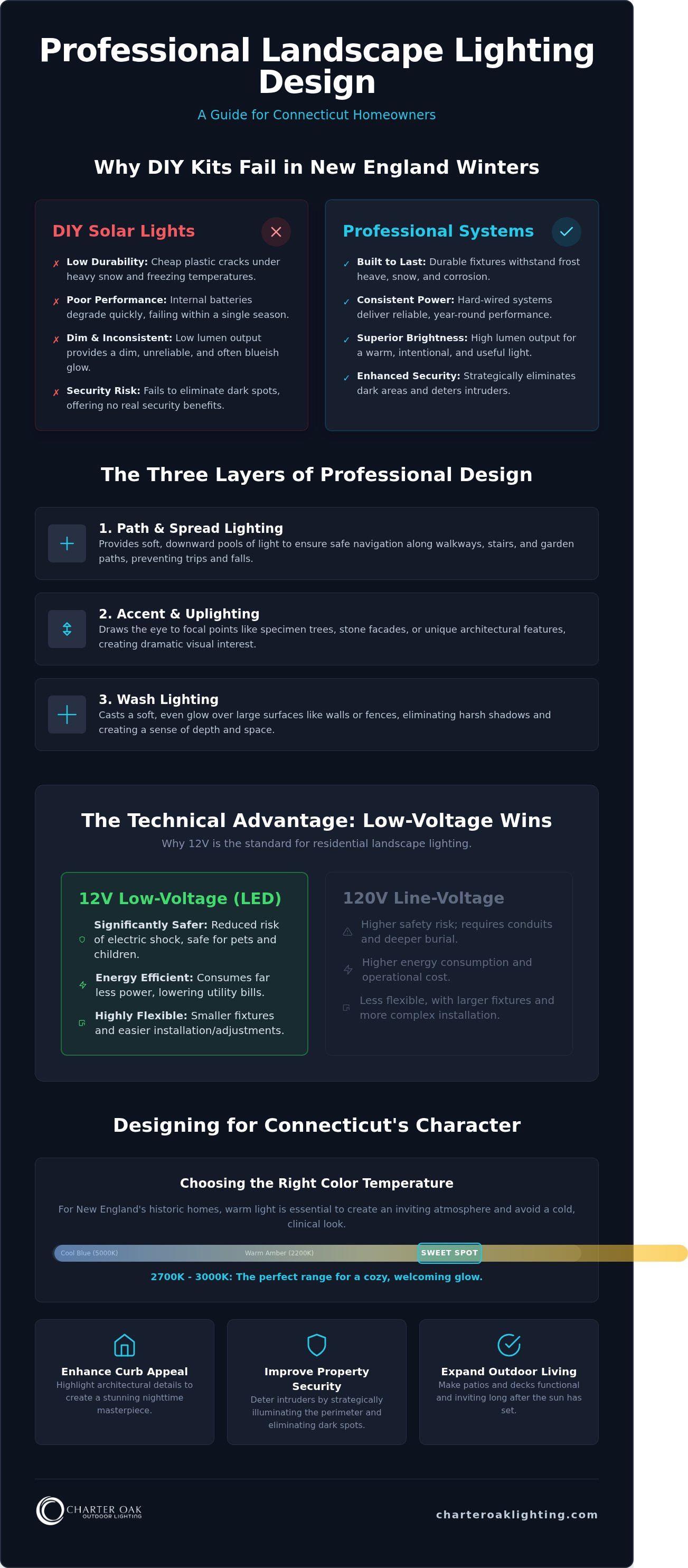
The technical foundation of these systems is equally important. A low-voltage landscape lighting system is a 12V setup that is significantly safer and more flexible than standard 120V household power. This technical advantage allows for smaller, more discreet fixtures and easier adjustments as your garden matures over time. By understanding the Fundamentals of Landscape Lighting, it's clear how these modern systems prioritize both energy efficiency and precise artistic control.
The primary goals for most local properties include enhanced curb appeal, expanded functional outdoor living, and robust property security. A well-designed system doesn't just look pretty; it discourages intruders by eliminating dark spots and makes evening gatherings on the patio feel as natural as sitting in your living room. Achieving this requires a layered approach that considers how light interacts with different surfaces and spaces.
The Three Layers of Professional Design
A comprehensive plan relies on three distinct layers to create depth and dimension across your property:
- Path and spread lighting: These fixtures provide soft, downward pools of light that ensure safe navigation along stone walkways or garden stairs.
- Accent and uplighting: This technique draws the eye to specific focal points, such as specimen trees or unique architectural features of the home.
- Wash lighting: By casting a soft, even glow over large surfaces like fences or broad walls, wash lighting eliminates harsh shadows and creates a sense of space.
Why "DIY" Solar Lights Fail in the Northeast
Many homeowners start with solar stakes from a big-box store, but these rarely survive the rigors of a New England winter. Connecticut’s heavy snow and freezing temperatures often crack cheap plastic housings and degrade internal batteries within a single season. Beyond mere durability, the professional landscape lighting design Connecticut properties require for longevity offers significantly higher light output, measured in lumens, compared to the dim, blueish glow of solar alternatives. A hard-wired system provides the consistent, year-round performance needed for true property security and lasting curb appeal. It ensures your investment doesn't fade when you need it most.
Designing for Connecticut’s Iconic Architectural Styles
Connecticut is famous for its rich architectural history, from centuries-old farmhouses to sleek modern builds in the Farmington Valley. Lighting is an art. Each style demands a unique approach to landscape lighting design Connecticut residents trust to preserve their home’s character. A critical element in this process is selecting the correct color temperature. For residential properties, we prioritize warm tones between 2700K and 3000K. This specific range mimics the cozy, inviting glow of interior lamps. It helps avoid the harsh, clinical blue light often found in mass-produced commercial fixtures that can make a historic home feel cold. Professional design bridges the gap between the structure itself and the surrounding environment, creating a cohesive nighttime presence.
In heavily wooded towns like Simsbury and Avon, the landscape often feels like it's pressing right up against the windows. Strategic lighting design helps push those boundaries back. By illuminating the perimeter of a deck or the textured trunks of nearby maples, we extend the warmth of your home into the evening air. It creates a reassuring sense of security. Implementing energy-efficient outdoor lighting ensures that this aesthetic transformation remains sustainable and cost-effective over the long term.
Illuminating Colonial and Cape Cod Homes
Colonial and Cape Cod homes rely heavily on balance and visual symmetry. Symmetry is key. Lighting for these structures should respect these traditional proportions rather than fighting against them. We often use wall-wash techniques to emphasize the rich texture of classic cedar siding or historic stonework without creating distracting "hot spots." Highlighting dormers and gables adds a necessary vertical dimension, making the home feel both grounded and majestic. This level of meticulous care is why many residents choose to partner with a design specialist to protect their home's architectural integrity.
Accenting Modern and Transitional Landscapes
Contemporary landscapes often feature bold hardscapes, minimalist paths, and clean architectural lines. Precision matters. When planning the modern landscape lighting design Connecticut homes often feature, we focus on how light interacts with shadows to create depth. In these settings, linear lighting works exceptionally well to accentuate sharp edges and geometric patterns. We also enjoy using silhouetting techniques, where fixtures are placed behind structural plants to cast dramatic shadows against flat, modern surfaces. Integrating lighting into outdoor kitchens or fire pit zones ensures these entertainment areas are safe and visually striking. Properly placed lights can define a space, turning a dark corner into a curated visual experience.
The Technical Advantage: Why Low-Voltage Systems Win
While the visual impact of outdoor lighting is often the first thing people notice, the technical foundation of the system determines its long-term success. For most residential properties, the choice between line-voltage and low-voltage systems is clear. Line-voltage systems, which run on standard 120V household power, were once common but are now largely reserved for heavy-duty commercial applications. They require heavy conduit and deep, expensive trenching that can disrupt your entire lawn. In contrast, the landscape lighting design Connecticut homes utilize today almost exclusively relies on 12V low-voltage technology. This shift allows for a more delicate and precise application of light, mirroring the sophistication of modern fixture designs found in high-end interior spaces.
Low-voltage systems eliminate the need for deep, expensive trenching by allowing wires to be tucked safely just a few inches below the surface. This technical advantage makes the installation process significantly faster and less invasive for your property. It also provides the designer with greater artistic freedom, as fixtures can be placed in locations that would be difficult or cost-prohibitive to reach with 120V lines. When planning a landscape lighting design Connecticut residents expect both beauty and technical reliability, and low-voltage systems deliver on both fronts.
Safety and Installation Flexibility
Safety is a primary concern for any homeowner. A 12V system is inherently safer for children, curious pets, and weekend gardeners alike. If a wire is accidentally nicked by a spade during spring planting, there's no risk of a dangerous electrical shock. This technology also offers unparalleled flexibility as your garden matures. Landscapes are living, breathing environments. A fixture that perfectly illuminates a sapling today will need to be repositioned as that tree grows. Low-voltage wiring makes these adjustments simple, ensuring your lighting evolves alongside your property with minimal impact on established flower beds or pristine turf.
LED Technology and Energy Savings
The transition from older halogen bulbs to professional-grade LEDs has revolutionized the industry. Modern LED fixtures are incredibly durable, often boasting a lifespan of up to 50,000 hours. This longevity translates to over a decade of reliable performance without the hassle of frequent bulb changes. Beyond durability, the energy footprint is significantly smaller. A full LED system typically uses about 80% less electricity than its halogen predecessor, providing substantial savings on your monthly utility bill. We also integrate smart controls, allowing you to manage automated schedules or dimming levels directly from a smartphone app. This fusion of efficiency and convenience ensures your home remains beautifully lit exactly when you need it.
The Professional Design and Installation Lifecycle
A successful project begins with a deep understanding of the land. Every property in the Farmington Valley possesses a unique topography, from the rolling hills of Avon to the rocky outcrops of Simsbury. A standard contractor might simply follow a perimeter, but a true designer looks for the hidden potential in every corner. This distinction is vital for a lasting result. While a contractor focuses primarily on the mechanics of installation, a designer considers how light interacts with shadows, textures, and the home's architecture. You can see the Charter Oak Outdoor Lighting process in action by exploring our recent work, which showcases this commitment to meticulous craftsmanship.
To endure the heavy snow and seasonal humidity of our region, we exclusively utilize professional-grade materials like solid brass and copper. These metals don't just survive the elements; they age gracefully, developing a natural patina that blends seamlessly into the landscape. This focus on durability and material quality is a cornerstone of the landscape lighting design Connecticut homeowners expect when investing in their properties. It ensures that the system remains a reliable asset for years to come.
Step 1: The Evening Consultation and Design
The journey starts with a collaborative conversation about your specific vision. Are you looking to enhance property security, create a warm atmosphere for evening entertaining, or perhaps a combination of both? During the consultation, we identify key focal points such as specimen trees, stone entryways, or high-traffic walkways. We also prioritize the reduction of light pollution. By using shielded fixtures and precise placement, we ensure your property is beautifully illuminated without creating distracting glare that disturbs neighbors or the natural night sky.
Step 2: Meticulous Installation Techniques
The installation phase is where artistic vision meets technical proficiency. We employ specialized techniques for wire burial and waterproof connections to prevent the wire corrosion that often plagues DIY systems in the Northeast. Proper zoning is also essential for a sophisticated system. This allow you to manage different areas of your property independently, such as keeping the front entryway lit for safety while dimming the back patio for a more intimate mood. The "final aim" is the most rewarding part of our process. We return to your property at dusk to fine-tune every fixture angle, ensuring the light falls exactly where it was intended.
If you're ready to see your home in a new light, contact us today to schedule your custom design consultation.
Protecting Your Investment: Maintenance and Long-Term Care
A professional landscape lighting design Connecticut homeowners invest in is a living system. It requires periodic attention to remain as breathtaking in its fifth year as it was on the first day of installation. Our local climate presents specific challenges, most notably frost heave. During the freeze-thaw cycles of a typical New England winter, the ground shifts, which can push fixtures out of alignment or expose buried wires. Without a proactive approach, these environmental stressors can slowly degrade the aesthetic and functional value of your property. Regular care ensures that the bridge between your interior comfort and exterior beauty remains intact through every season.
Beyond the physical movement of the earth, the very plants your system highlights are constantly evolving. As your specimen trees mature or your perennial gardens thicken, the original placement of your lights may no longer be optimal. A branch that once caught a soft glow might now block the beam entirely, creating unintended shadows or glare. Seasonal maintenance ensures that your landscape lighting design Connecticut properties rely on for curb appeal adapts to the natural growth of your garden. This methodical attention to detail preserves the balance and elegance of the original vision while protecting the technical components from the elements.
Preventing Wire Corrosion and Connection Failure
The high salt content and persistent moisture in Connecticut soil can rapidly degrade poor-quality electrical connections, leading to system failure. This is why we prioritize professional-grade, heat-shrink connectors that create a truly airtight seal. These specialized components prevent moisture from reaching the copper wire, which is the leading cause of flickering or dimming lights. If you notice a single fixture losing its luster while others remain bright, it's often a sign that a connection has been compromised by the elements. Addressing these issues early prevents small technical glitches from becoming expensive repairs.
Seasonal Maintenance Checklist
To keep your property looking its best and functioning safely, we recommend a consistent maintenance routine that addresses both performance and aesthetics:
- Cleaning lenses: Over time, mineral deposits and dirt cloud the glass, which significantly reduces lumen output and clarity.
- Pruning foliage: Trimming back overgrowth ensures light paths remain clear and prevents heavy branches from leaning on or damaging delicate fixtures.
- Adjusting timers: As the days shorten in the fall or lengthen in the spring, your system should be updated to reflect the changing dusk times, ensuring your home is never left in the dark.
By staying ahead of these small tasks, you ensure your home remains a beacon of tranquility and safety. You can keep your system shining year-round with Charter Oak’s maintenance services, designed to handle the technical details so you can simply enjoy the refined atmosphere of your home.
Elevate Your Property’s Evening Potential
Your home is a significant investment; its beauty shouldn't fade when the sun goes down. Throughout this guide, we've explored how professional landscape lighting design Connecticut homeowners choose focuses on more than just visibility. It's about respecting the architectural heritage of your Colonial or Modern home while utilizing high-durability low-voltage systems that withstand our rigorous New England seasons. From the artistic precision of the initial evening consultation to the long-term reliability of moisture-resistant connections, every detail serves to enhance your property's security and aesthetic pride.
We're proud to bring this level of meticulous craftsmanship to families across Farmington, Avon, Simsbury, and West Hartford. By bridging the gap between your interior comfort and the natural world outside, we create an environment that feels both secure and sophisticated. If you're ready to transform your outdoor living space into a nighttime sanctuary, we invite you to Request Your Custom Lighting Design Consultation today. Let's work together to reveal the hidden potential of your property and ensure it shines brilliantly for years to come.
Frequently Asked Questions
How much does a professional landscape lighting system cost to run monthly?
Modern low-voltage LED systems are incredibly efficient. They typically consume about 80% less energy than older halogen setups. Because these systems use minimal wattage to produce high lumen output, the impact on your monthly utility bill is often negligible. While exact energy rates vary across West Hartford and Avon, most homeowners find that running a full professional system costs significantly less than traditional incandescent outdoor floodlights.
Will landscape lighting installation damage my existing lawn or gardens?
Professional installation is designed to be minimally invasive. Unlike high-voltage systems that require deep, wide trenches, low-voltage wires are tucked just a few inches below the surface. We use specialized tools to carefully slit the turf and hand-dig near delicate root systems in Simsbury gardens. Once the soil is settled and the grass grows back, the installation becomes virtually invisible, leaving your established landscape undisturbed and beautiful.
What is the difference between warm white and cool white lighting for my home?
Color temperature is measured in Kelvins. Warm white, usually between 2700K and 3000K, provides a cozy, inviting glow that complements the stone and wood found in traditional architecture. Cool white light, which is 4000K or higher, often appears blue or clinical. We almost exclusively recommend warm tones for landscape lighting design Connecticut properties because they enhance the natural beauty of the environment without feeling harsh or artificial.
Can I add more lights to my system later if I expand my patio or gardens?
Yes, our systems are designed with future growth in mind. When we install your initial transformer, we typically select a model with extra capacity to accommodate future additions. If you decide to expand your patio in Farmington or add new garden beds in Glastonbury, we can easily tap into the existing lines. This flexibility ensures your lighting evolves alongside your property, allowing for a phased approach to your outdoor transformation.
Do I need a permit for low-voltage landscape lighting in Connecticut?
In most Connecticut municipalities, low-voltage systems under 30 volts don't require a formal building permit for residential installation. However, it's essential to comply with local DarkSky ordinances and the state's "Lights Out" law. These regulations focus on reducing light pollution and energy waste. We stay informed on the specific codes in towns like West Hartford to ensure your system is both beautiful and fully compliant with local standards.
How does landscape lighting improve my home’s security?
Strategic lighting is a powerful deterrent for potential intruders. By eliminating dark spots and shadows around entry points, windows, and garages, you remove the cover of darkness that burglars rely on. A well-lit home also signals that the property is well-maintained and occupied. We focus on illuminating the perimeter and high-traffic zones to provide a sense of security that motion-sensor floodlights alone simply cannot match.
What happens to my landscape lights during a Connecticut winter?
Connecticut winters are a true test of durability. Our professional-grade brass and copper fixtures are built to withstand heavy snow loads and freezing temperatures without cracking or corroding. While frost heave can occasionally shift a fixture's alignment, the underlying system remains protected by waterproof, heat-shrink connections. We recommend a spring check-up to ensure everything is still positioned correctly after the ground thaws, keeping your evening atmosphere consistent year-round.
How long do professional LED landscape light bulbs typically last?
High-quality LED bulbs are engineered for longevity, typically lasting up to 50,000 hours of use. If your system runs for six hours every evening, you won't need to worry about bulb replacements for nearly 20 years. This reliability is a major advantage over older halogen bulbs, which often fail after just one or two seasons. Investing in professional-grade LEDs ensures your landscape lighting design Connecticut homeowners enjoy remains reliable for the long haul.